


I have spent years working with rural land buyers, sellers, and investors, and during that time I have seen plenty of companies enter the market with big promises. Some disappear after a short run, while others build a reputation through steady work and reliable service. One thing I have learned is that the people behind a company often matter more than the software or marketing itself. That is especially true when talking about the team behind Land Boss.
Early in my career, I focused almost entirely on tools and features. If a platform offered mapping, owner data, or mailing capabilities, I assumed that was enough. After working through several market cycles, I realized the quality of support and the knowledge of the people building those tools often made a bigger difference than the technology itself.
Land investing is not a simple business. A person might review 50 properties in a week and still spend hours researching access issues, zoning questions, or ownership records. When software is built by people who understand those daily challenges, the experience feels different. Small details often reveal whether a team truly knows the work.
I remember speaking with another investor a few years ago who had switched platforms twice in less than twelve months. His complaint was not about pricing. He felt the companies he tried were built by people who did not understand how land investors actually operate in the field.
That conversation stayed with me. Real-world experience creates better decisions, especially in a niche business where every county seems to have its own quirks and every deal presents a different challenge.
One reason I became interested in learning more about the company was hearing repeated mentions of the people involved in building it. While researching tools and resources for my own projects, I spent time reading about the team behind Land Boss, Their background appeared closely tied to the practical side of land investing rather than purely software development. That distinction caught my attention because it often shapes how a product evolves over time.
In my experience, teams with direct industry involvement tend to prioritize different features. They think about how quickly someone can evaluate acreage, identify ownership patterns, or organize outreach efforts. Those priorities usually come from firsthand exposure to actual transactions rather than theoretical business models.
A customer I worked with last spring was managing leads across three states. He was less concerned about flashy dashboards and more interested in reducing repetitive tasks. His comments reflected what many active investors want from the companies serving them. Efficiency matters because time spent chasing data is time not spent evaluating opportunities.
There is also a trust element involved. People buying and selling land often deal with significant financial decisions, and they want to know the companies supporting their work understand the realities of the market. That confidence develops gradually. It rarely comes from advertising alone.
Culture is one of those things that sounds abstract until you experience the results firsthand. I have worked with organizations where support requests sat unanswered for days. I have also worked with teams that responded quickly because they understood the urgency behind a pending transaction.
The difference usually starts internally. When a company values practical problem solving, customers often notice. A team that regularly listens to feedback is more likely to refine tools based on actual use rather than assumptions.
Small interactions reveal a lot. Very often.
I once had a software issue during a busy acquisition campaign involving dozens of property owners. The company helping me did not simply send a generic response. Someone took time to understand what I was trying to accomplish and suggested a better workflow. That experience reinforced my belief that knowledgeable teams create better outcomes than feature lists alone.
From what I have observed throughout the industry, successful organizations tend to share a few characteristics:
They listen closely to customer feedback, they remain connected to the realities of the market, and they continue refining their products even after initial success. Those habits may sound simple, yet they are surprisingly uncommon in specialized industries.
People outside the business sometimes assume land investing is straightforward. In reality, there are countless moving parts. Ownership records can be outdated, county procedures vary widely, and evaluating property value often requires more judgment than many people expect.
Teams with direct exposure to these challenges generally approach product development differently. They recognize that investors may review hundreds of parcels before finding a strong opportunity. They understand that a missing detail can delay a project for weeks.
I have spent afternoons comparing county records across multiple jurisdictions, trying to verify information that appeared inconsistent from one source to another. Those experiences make me appreciate companies that design solutions around actual field conditions rather than ideal scenarios.
Another challenge involves scale. An investor managing a handful of properties has different needs than someone reviewing thousands of acres each month. Building tools that serve both groups requires a strong understanding of how land businesses grow over time.
The learning never stops.
After years of watching companies enter and leave the market, I pay attention to the people behind the operation. Products change. Features get updated. Ownership structures sometimes shift. The quality of the team often remains the most reliable indicator of long-term value.
A capable team combines technical skills with practical knowledge. One without the other usually creates limitations. Great software built without industry understanding can miss obvious needs, while deep industry knowledge without technical execution may struggle to deliver consistent results.
I have found that the strongest organizations usually maintain an ongoing conversation with their users. They ask questions. They test ideas. They adapt when conditions change. Those habits create products that remain useful long after the initial launch period.
For anyone working in land investing, it is worth spending a few extra minutes learning about the people behind the tools you use every day. The quality of that team can influence everything from customer support to future product improvements. In a business where details matter and decisions often involve substantial investments, understanding who is behind a platform can be just as valuable as understanding the platform itself.
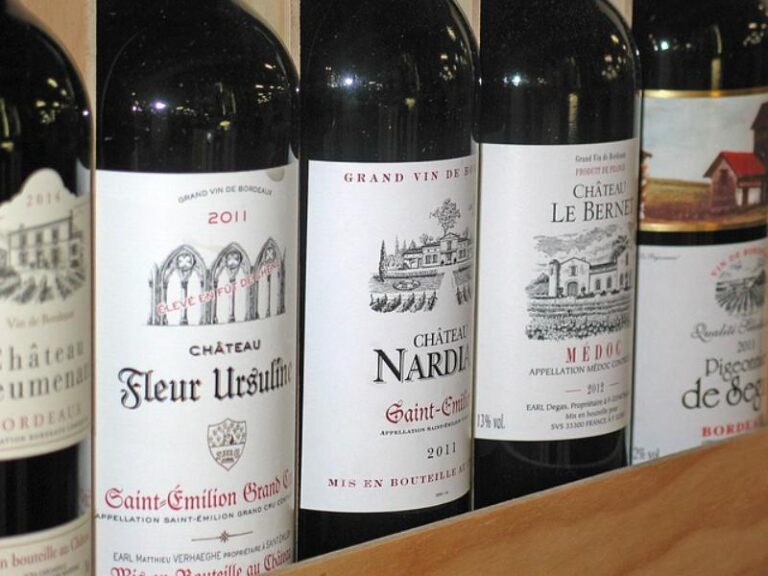
Let’s say you pick up a bottle and turn it around a few times. Front label, back label, maybe the neck.
Most labels throw a lot at you, but only a few parts really matter in the moment.
I don’t read them top to bottom. I scan for signals.
First thing I look for is where it’s from.
If the label says Napa Valley, I already have a rough expectation. Riper fruit, more body, often more alcohol. If it’s from somewhere cooler, I expect more acidity and restraint.
Region shapes the style more than people realize.
Two bottles made from the same grape can taste completely different depending on where they’re grown. I’ve had customers fixate on varietal alone and end up surprised by what’s in the glass.
So I always anchor myself with location first.
Next, I check the varietal.
Cabernet Sauvignon, Pinot Noir, Chardonnay. That gives me a starting point, but not a full picture.
A Cabernet from Napa Valley is going to behave differently than one from a cooler region. Same grape, different expression.
If it’s a blend, the label might not even tell you everything. Some regions allow a wine to be labeled by the dominant grape even if others are in the mix.
So I treat the varietal as a clue, not a conclusion.
This is one of the most overlooked parts of the label.
That small number near the bottom tells you a lot.
Higher alcohol usually means a riper, fuller style. Lower alcohol tends to point toward something lighter or more restrained.
It’s not a strict rule, but it’s a useful shortcut.
If I’m choosing between two similar bottles and one is noticeably higher in alcohol, I already know it’s likely going to feel heavier on the palate.
The year on the bottle gets a lot of attention.
In reality, it matters more in some regions than others. Places with variable weather see bigger differences from year to year. More stable climates produce more consistent wines.
In the shop, I don’t obsess over vintage unless I know there was something unusual about that year.
If you’re buying a wine meant to be enjoyed soon, the vintage is usually less critical than people assume.
Where it does matter is aging. Older vintages can mean more developed flavors, but only if the wine was made to last.
The winery name can tell you a lot, but only if you already know it.
When I recognize a producer, I can guess the style pretty quickly. If I don’t, the name itself doesn’t help much.
That’s why people rely on recommendations or past experience. Over time, you start remembering which names line up with what you like.
Until then, the rest of the label does more of the work.
Turn the bottle around and you’ll usually get a paragraph.
Some of it is useful. Some of it is just marketing.
Phrases like “rich,” “bold,” or “elegant” sound helpful, but they’re not regulated. Different producers use them differently.
I read back labels quickly. If there’s something concrete, like how the wine was aged or a specific note about style, I pay attention. Otherwise, I don’t rely on it too much.
It’s there to give an impression, not a guarantee.
There are a few extra things I check if I’m unsure.
Whether the wine is estate bottled can hint that the producer controls more of the process. Not always better, but sometimes more consistent.
Any mention of aging, like time spent in oak, can signal texture and flavor direction.
Certifications or classifications can matter in certain regions, but they’re more useful once you already understand the system behind them.
These aren’t deal-breakers. They’re tie-breakers.
After scanning all of that, I’m not trying to “decode” the wine perfectly.
I’m just narrowing it down.
Is this likely to be light or heavy? Fresh or rich? Something to sip easily or something to sit with?
That’s usually enough to make a good choice.
The rest, you only learn once the bottle is open. And honestly, that’s part of the point.
Harvest season doesn’t run on a normal schedule.
My phone would buzz in the dark, usually earlier than I wanted. First thing I’d check wasn’t messages, it was the pickup plan. Which vineyards were coming in, how much fruit, and roughly when the trucks would arrive.
Coffee happened fast. Layers went on without much thought. By the time I got to the winery, there’d already be a quiet kind of energy in the air. Lights on, doors open, forklifts warming up.
No music yet. That comes later.
The first bins of grapes show up just after sunrise, sometimes earlier depending on the vineyard.
White grapes usually get priority. They go straight to the press. Reds take a slightly different path, heading toward the crusher-destemmer before landing in open-top tanks.
Once fruit starts moving, the pace changes. There’s a rhythm to it, but it’s not slow.
Forklifts moving bins. Hoses dragging across the floor. Someone checking numbers, someone else yelling over the noise to confirm where the next load is going.
You don’t stand around. You stay just ahead of the next thing.
From the outside, winemaking looks calm. Inside the cellar during harvest, it’s not.
You’re lifting, pulling, climbing, rinsing, repeating. Everything gets sticky fast. Grape juice finds its way onto your gloves, your sleeves, your boots.
I remember one stretch where we were processing fruit back to back for hours. No real breaks, just quick pauses to drink water and keep moving.
It’s the kind of tired that builds slowly, then hits all at once when things finally slow down.
There’s a plan going into the day, but it adjusts constantly.
Sugar levels, acidity, the condition of the fruit, all of that gets checked as it comes in. If something looks off, decisions get made right there.
Do we press this sooner? Let it sit longer? Adjust temperature? Change the order of what gets processed?
You learn quickly that harvest isn’t just manual labor. It’s a series of small calls that shape what ends up in the bottle months or years later.
Most of those decisions aren’t dramatic. They’re quiet, quick, and based on experience.
At some point, you realize it’s already afternoon.
Lunch happens, but it’s not a sit-down break most days. More like grabbing something quick and getting back to it before the next load shows up.
The cellar gets louder as the day goes on. Someone puts music on. People start talking a bit more, joking between tasks.
But the work doesn’t really slow. If anything, it stacks up.
Tanks need monitoring. Equipment needs cleaning. New fruit keeps arriving.
This is the part people don’t picture.
For every bin of grapes that comes in, there’s equipment that needs to be cleaned right after. Presses, hoses, tanks, floors.
If you fall behind on cleaning, it catches up fast.
So you rinse, scrub, sanitize, and then do it again. Sometimes while something else is already running.
I’ve spent entire stretches of a shift just chasing clean equipment so the next batch can move through.
It’s repetitive, but it matters. Clean equipment keeps the process consistent.
You think you’ll be done by a certain time. You’re usually wrong.
If fruit is still coming in or something needs attention, you stay.
I’ve had days where we wrapped up around dinner, and others where we were still working well into the night. It depends on the pace of harvest and how the day unfolded.
By the time things finally quiet down, the energy from the morning is gone. The cellar feels different. Slower, heavier.
You clean up, check what needs to be ready for the next day, and head out.
During harvest, everything feels immediate. Move the fruit. clean the gear. keep things running.
You don’t think much about the end result in the moment.
Then months later, you taste a wine and recognize it. Not in a dramatic way, but in small details.
A tank you worked on. A long day that blended into the next. Decisions that felt minor at the time.
It’s a strange feeling. Most of the work is repetitive and physical, but it adds up to something that lasts a lot longer than the shift you were on.
That’s the part people don’t see from the tasting room.
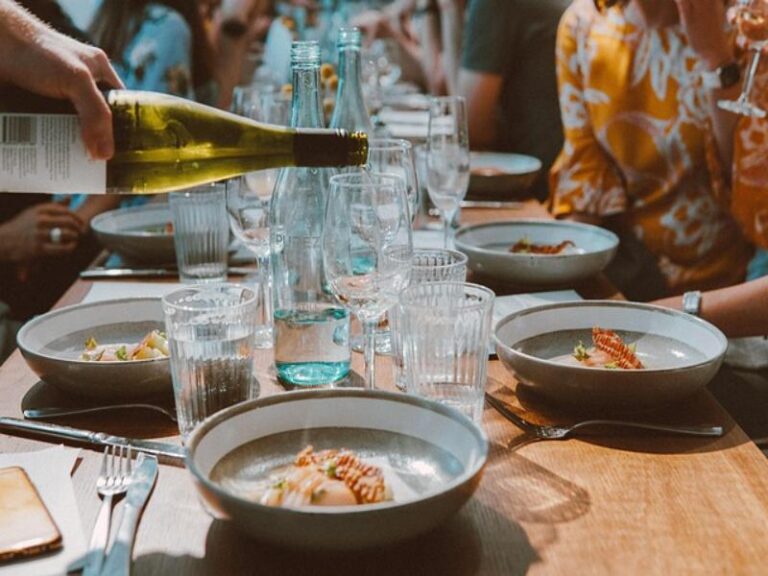
A couple would sit down, open the wine list, and freeze.
They’d ask what pairs with their meal like there’s a single correct answer. There isn’t. There are bad pairings, sure, but there’s usually a range that works.
What matters more is how the wine and food interact, not whether they follow some rule you read somewhere.
So I stopped thinking in terms of “perfect matches” and started thinking in terms of balance.
This comes up almost every night.
Someone orders a ribeye and goes straight for a bold red, usually a Cabernet. That pairing works a lot of the time. The fat in the steak softens the tannins in the wine, and everything feels smoother.
But then someone orders a leaner cut, like a filet, and picks the same wine. That’s where things can feel off. The wine can overpower the meat.
In those cases, I’d steer them toward something a bit softer. Still red, but less aggressive. It keeps the balance.
The idea isn’t matching names. It’s matching weight.
One of the most useful pairing habits I picked up was leaning on acidity.
When a dish is rich, creamy, or heavy, a wine with good acidity cuts through it. It keeps the whole experience from feeling too dense.
I’ve seen this click for people with something as simple as pasta in a cream sauce. They expect a heavy wine to match it, but a brighter white or a lighter red often works better. It refreshes your palate between bites.
Once you notice it, you start reaching for acid more often than anything else.
Dessert pairings are where things go wrong quietly.
If the wine is less sweet than the dessert, it can taste flat or even a bit sour next to the food. That catches people off guard.
I used to watch guests sip a dry wine with a sweet dessert and look slightly confused. Nothing was technically wrong, but it didn’t work.
The fix is simple. The wine should be at least as sweet as the dish, if not more. Once you follow that, dessert pairings get a lot easier.
Spice throws a curveball.
Big, tannic reds that work well with other foods can feel harsh with spicy dishes. The heat amplifies the alcohol and tannins, and the wine ends up feeling hotter than it is.
In those situations, I’d go in the opposite direction. Something with a bit of sweetness or lower alcohol. It calms things down instead of adding to the intensity.
I remember a table that insisted on a bold red with a spicy dish. After a few bites, they switched to a lighter, slightly off-dry option and the whole meal settled into place.
If I had to reduce everything to one habit, it’s this.
Light dishes work with lighter wines. Heavier dishes can handle bigger wines.
It sounds obvious, but it solves a lot of decisions.
A delicate fish doesn’t need a heavy, structured red. A rich, slow-cooked dish can handle something with more weight.
You’re not trying to mirror flavors exactly. You’re trying to keep one from overwhelming the other.
Some of the best combinations I’ve seen didn’t follow any standard advice.
A guest once paired a lighter red with a fish dish and it worked because of how it was prepared. Another time, someone drank a crisp white with a steak simply because that’s what they enjoyed. It wasn’t traditional, but they liked it more than the “correct” option.
That stuck with me.
Guidelines help you avoid obvious mistakes, but they’re not there to box you in.
If you’re choosing wine with food, start simple.
Think about how heavy the dish is. Notice if it’s rich, acidic, or spicy. Then pick a wine that balances that, not one that competes with it.
And if you’re between two options, go with the one you’re more curious about. Worst case, it’s just a glass of wine that didn’t quite match. Best case, you find something you didn’t expect to like.
That’s usually how the good pairings happen anyway.
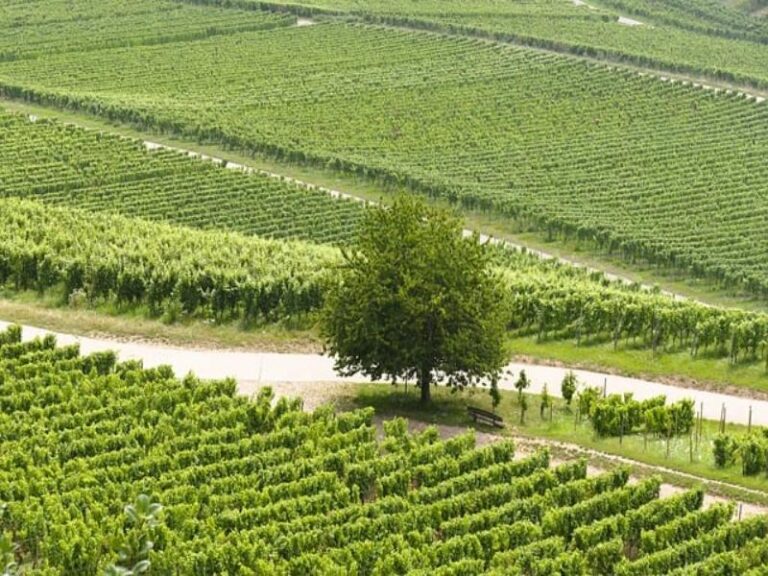
Most people walk into a tasting in Napa Valley already thinking about Cabernet Sauvignon. That’s fair. It’s what put the region on the map, especially after the Judgment of Paris.
But if you only drink Cabernet here, you’re missing half the story.
I usually start by pouring something else first. It resets expectations.
Let’s start with the obvious.
Cabernet Sauvignon in Napa is powerful. That’s the reputation, and most of the time, it holds up. You get structure, darker fruit, and that firm backbone that makes people think about aging.
What doesn’t get talked about enough is how much style varies depending on where it’s grown and how it’s handled. A bottle from a warmer valley floor site can feel rich and plush. Something from higher elevation tends to come off more structured, sometimes even a bit tighter when young.
I remember tasting two Cabernets back-to-back with a winemaker friend. Same vintage, same general area, completely different feel in the glass. One was all ripe fruit and soft edges. The other needed air and time just to open up.
So when someone says they like Napa Cabernet, I usually ask a follow-up. What kind?
Chardonnay is where opinions get loud.
A lot of people come in expecting heavy oak and butter. That style exists, no question. It was especially popular for a long stretch, and some producers still lean into it.
But there’s been a shift over the years.
More wineries are pulling back on oak or using it more carefully. You’ll still get richness, but with more balance. Better acidity, cleaner finish.
I’ve poured Chardonnays for people who swore they didn’t like the varietal, only to watch them change their mind halfway through the glass. Usually because what they had before was one extreme version.
It’s a reminder that the grape isn’t the problem. The style is what changes the experience.
Merlot doesn’t get much respect in casual conversations, but it’s doing a lot of work behind the scenes.
On its own, Napa Merlot can be smooth, approachable, and a bit more forgiving than Cabernet. Softer tannins, rounder texture.
But it really shines in blends.
A lot of Napa reds that people love have a portion of Merlot in them, even if it’s not the headline. It fills in gaps, softens edges, and makes wines more drinkable earlier.
I’ve had customers dismiss Merlot outright, then fall in love with a blend where it’s a key component. Funny how that works.
After a few heavier wines, I’ll usually bring out a Sauvignon Blanc.
In Napa, it can go a couple of directions. Some are crisp and bright, leaning into citrus and freshness. Others see a bit of oak and come out rounder, almost bridging the gap toward Chardonnay.
It’s one of the most useful wines in a tasting lineup. It wakes up your palate.
On hot afternoons, it’s also the one people finish first.
Zinfandel has a reputation for being bold and fruit-forward, and that’s often true.
But Napa Zinfandel can surprise you.
Older vines, in particular, can produce wines with more depth and structure than people expect. Not just jammy fruit, but spice, earth, and a bit of grip.
I remember tasting a Zin from a small producer that had more in common with a structured red blend than the easy-drinking style people associate with the grape.
It’s one of those varietals where you shouldn’t assume too much before tasting.
There are other varietals in Napa that don’t always get center stage but are worth your time.
Cabernet Franc shows up both on its own and in blends, often bringing a bit of lift and aromatic complexity.
Petit Verdot tends to be used in small amounts, adding color and structure, though some producers bottle it solo with interesting results.
Syrah pops up here and there, especially in cooler pockets, and can be more restrained than what people expect from warmer regions.
You won’t see these everywhere, but when you do, they’re often made with intention.
After years of pouring and buying, I don’t think the varietal alone tells you enough.
Two Napa Cabernets can taste more different from each other than a Cabernet and a Merlot from the same producer.
Where the grapes are grown, how the wine is made, and how long it’s aged all shape the final result.
If you’re standing in a tasting room or a shop, it’s worth asking a simple question: what style is this?
That answer usually gets you closer to what you’ll actually enjoy than the varietal name on the label.
And if you’re in Napa Valley, it’s worth stepping outside your default order at least once. That’s usually where the interesting stuff starts.